Pay Up or Sit in Traffic? Tennessee’s Troubling I-24 Toll-Lane "Choice Lanes" Plan

We don't normally chime in on local transportation issues like this, but Road Tour travels through Tennessee extensively. We drive its interstates, visit its cities and businesses, and experience firsthand the congestion facing Middle Tennessee. This is an important issue, and it's one that deserves far more attention from Tennessee residents. The Tennessee Department of Transportation is moving forward with its I-24 Southeast “Choice Lanes” project between Nashville and I-840. TDOT says the approximately 26-mile project will add two new optional managed lanes in each direction while preserving the existing general-purpose lanes. Drivers choosing the new lanes will pay a variable user fee in exchange for what TDOT describes as a faster and more reliable trip. This is one bad idea in the long history of bad ideas given by DOT's in America.
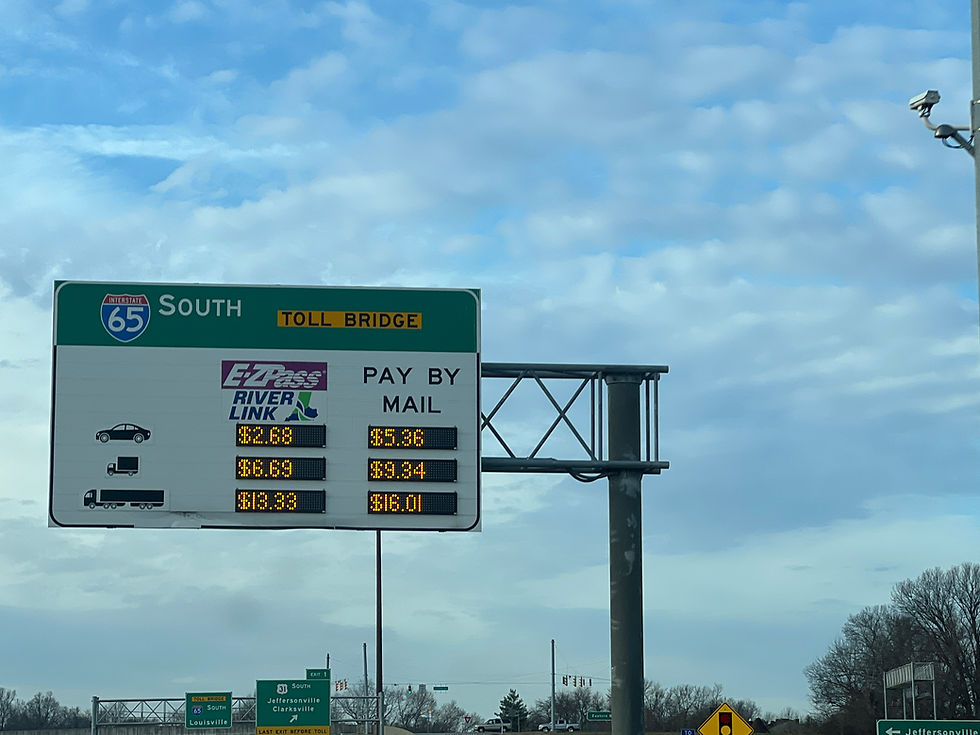
Let's start with the terminology. TDOT calls them “Choice Lanes.” That's a disguise. We call them what motorists will understand them to be and will call them: toll lanes. TDOT itself says motorists will have to pay a “user fee” to drive in these lanes. The department distinguishes Choice Lanes from a traditional toll road because motorists can continue using the existing general-purpose lanes without paying. Fine. Technically, the entire interstate isn't becoming a toll road. But a highway lane that requires ordinary motorists to pay money to use it is, in practical terms, a toll lane. Calling the charge a “user fee” and branding the lanes as “Choice Lanes” doesn't change what happens when a driver enters one: you pay. TDOT needs to quit the word games and call these lanes what they are. Middle Tennessee has a congestion problem. Nobody who regularly drives I-24 between Nashville and Murfreesboro needs a government study to tell them that. Our disagreement is with the proposed solution. TDOT says no existing general-purpose lanes will be taken away and that the project will add two new Choice Lanes in each direction. Our question is simple: Why shouldn't that new capacity be available to everybody? Because a tolled-capacity is borderline useless, it's a half measure to resolving traffic issues. Better yet, it's a quarter measure. If Tennessee is undertaking a massive interstate expansion, Road Tour believes the priority should be adding general-purpose capacity that every motorist can use without asking whether the trip is worth another charge. Tennessee motorists already pay fuel taxes, vehicle registration fees and numerous other taxes and fees. Interstate capacity shouldn't increasingly become a premium product where motorists stuck in congestion can buy their way into a faster lane. To us, that sends a terrible message to motorists: the traffic is miserable, but if you're willing to pay more, here's a better highway. That's unacceptable. This isn't necessarily going to be a simple flat toll, either. TDOT has said the user fee will vary according to congestion. In other words, when demand for the roadway is highest, precisely when commuters most desperately need relief, the price can rise to manage demand. That may make sense on somebody's traffic-management spreadsheet, but we don't believe it makes sense as the direction Tennessee should take its interstate highway system.
And that's another fundamental problem with toll lanes: they primarily benefit the motorists willing and able to pay for them. Road Tour expects many motorists will simply refuse to pay an additional charge to drive to and from work, leaving them in the same congested general-purpose lanes while paying customers receive access to the new premium capacity. Charlotte's I-77 Express Lanes provide a real-world example of this two-tier approach: the photo below accompanying this article shows traffic using the regular lanes (general purpose lanes) while comparatively fewer vehicles occupy the tolled express lanes. A photograph by itself doesn't establish overall usage rates, but it does illustrate the basic problem we're talking about, access to the faster lanes will only be for the few. We can use SR 167 "Valley Freeway" toll lanes in the Seattle area and I-495 in Northern Virginia as an example too, among many others. Why is this foolery even being proposed? It's all about the money, not about citizens. It's a ruse.

Tolls get super expensive. Even a seemingly modest toll, when paid repeatedly on the way to and from work, can amount to hundreds of dollars per year for a single vehicle. A hypothetical $2 toll used twice per workday for 250 working days would cost $1,000 annually. At $5 each way, the same commuting pattern would reach $2,500. Actual costs will depend on TDOT's eventual pricing and how frequently a motorist chooses to use the lanes, but that's precisely the point: regular access to newly constructed highway capacity could become another recurring transportation expense for Tennessee families. Tennessee should also pay close attention to what has happened around Charlotte, North Carolina. The I-77 Express Lanes stretch approximately 26 miles from Uptown Charlotte north toward Mooresville. Drivers can pay to use express lanes while the existing general-purpose lanes remain free. The project opened in 2019 and is operated and maintained by a private developer. North Carolina subsequently pursued another major express-lane project on I-77 south of Uptown Charlotte toward the South Carolina state line. The proposal calls for adding toll lanes along approximately 11 miles of I-77. Charlotte officials initially withdrew their support in May 2026, helping bring planning work on the controversial project to a halt. But the story didn't end there. The North Carolina legislature subsequently passed a law that could require Charlotte and other local governments opposing the project to repay tens of millions of dollars that NCDOT says it had already spent. Facing the possibility of a massive repayment bill, Charlotte City Council reversed course in September 2026, voting 7–4 to restore its support for the I-77 South toll lanes. That history should be required reading in Tennessee because one of our biggest concerns is simple: Where does this stop? I-24 today. What highway tomorrow?
Once Tennessee establishes the infrastructure, bureaucracy, private partnerships and political precedent necessary for dynamically priced interstate lanes, expanding the concept becomes considerably easier. TDOT already describes Choice Lanes as a program, not merely a single I-24 construction project. Tennessee's Transportation Modernization Act gave TDOT authority to use public-private partnerships and enabled development of the Choice Lanes program. That's exactly why Tennesseans should pay attention now. Residents shouldn't wake up 20 years from now and discover that navigating Nashville means repeatedly deciding between sitting in congested general-purpose lanes or paying additional fees for premium highway capacity.
A lot of Californians and residents of other high-cost states have moved to Tennessee in recent years. Tennessee should be careful that, as it grows, it doesn't begin importing the same policies and ideas that many people wanted to leave behind. We don't want Tennessee turning into the nonsense of California, where paying additional money to escape congestion has become increasingly normalized. Tennessee doesn't need to copy California, Chicago, Houston, Orlando or any other place that has embraced extensive tolling. One reason people and businesses are attracted to Tennessee is because the state has historically offered something different. Keep it different. If I-24 needs additional capacity, build additional general-purpose capacity. If interchanges need reconstruction, reconstruct them. If bottlenecks need eliminating, eliminate them. If Nashville and Murfreesboro need substantially better transportation infrastructure to accommodate their explosive growth, build it. But don't normalize the idea that the best new interstate lanes should be reserved for motorists willing or able to pay an additional fee.
TDOT presents Choice Lanes as an optional solution. Nobody has to pay, existing general-purpose lanes remain free, and motorists who value a more reliable trip gain another option. That's the TDOT's argument, and motorists should understand it before forming their own view. Road Tour strongly disagrees with that approach. We believe Tennessee should concentrate on expanding transportation capacity that benefits the broadest possible number of motorists without creating a two-tier interstate system — one experience for people who pay extra and another for everybody else. Tennesseans who share that concern need to make their voices heard now, not after miles of toll lanes have already been constructed. Contact TDOT. Contact state lawmakers. Contact local representatives. Ask why billions of dollars in new interstate infrastructure shouldn't be available to everyone who uses the highway. Because this debate is bigger than one 26-mile stretch of I-24. It's about what Tennessee's interstate system will look like decades from now. Once toll lanes become accepted as the solution to congestion on one major interstate, don't be surprised when somebody proposes them for another.
“Choice Lane.” “Managed Lane.” “User Fee.” Call it whatever you want. If motorists have to pay money to drive in the lane, it's a toll lane. This is a knuckleheaded idea. Plain and simple.
There will be an opportunity for the public to ask questions and speak their mind. TDOT says it plans to hold open-house meetings in November 2026 to discuss DriveTN's technical proposal for the I-24 Southeast Choice Lanes project. As of early October, TDOT has not announced the specific dates and locations, saying additional details will be released in the coming weeks.
These meetings matter. Tennesseans who have concerns about tolling, variable pricing, the cost to daily commuters, future expansion of Choice Lanes and why new general-purpose lanes aren't being prioritized should use these opportunities to ask questions and make their concerns known. This project could influence how Tennessee approaches highway expansion for decades, and the public deserves to be heard before toll lanes become a normal part of the state's interstate system.
Check out our article in traffic solutions for the Nashville area here.