


The Data Center Debate with Solutions

As society becomes increasingly dependent on cloud computing, artificial intelligence, streaming services, digital commerce, and online communication, the demand for data centers continues to accelerate at an unprecedented pace. These facilities now serve as the backbone of the modern economy, powering everything from banking systems and healthcare networks to entertainment platforms and government operations. Because of this, there is understandable pressure to build more infrastructure quickly in order to keep pace with technological growth. However, the speed and scale at which data centers are being developed has also sparked growing concern among citizens, urban planners, environmental advocates, and local governments. The debate is no longer about whether data centers are necessary—they clearly are—but rather about how they should be integrated into society in a responsible and sustainable way.
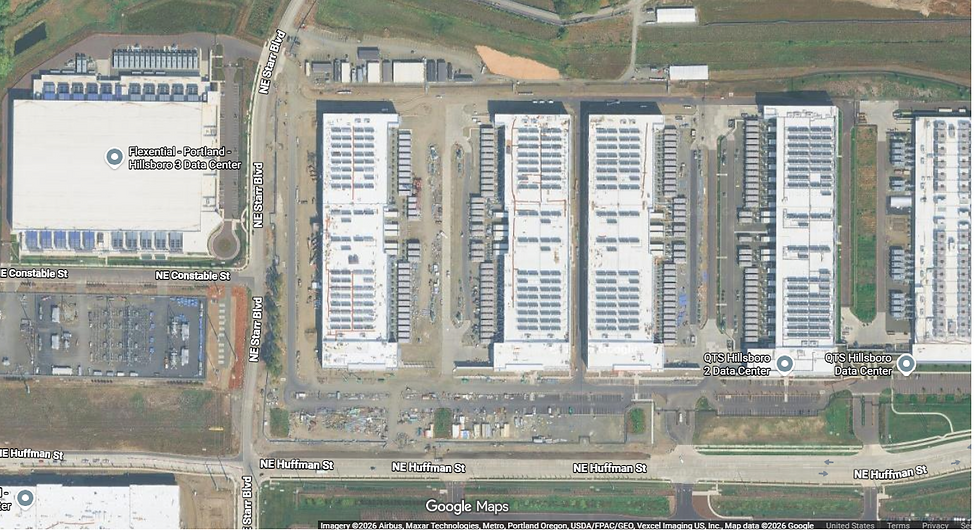
Technology should not be handicapped or unnecessarily restricted. Innovation has driven enormous economic growth, created jobs, connected the world, and improved countless aspects of everyday life. Attempting to stop technological progress outright would be unrealistic and ultimately harmful. At the same time, it is equally unreasonable to assume that large technology corporations should be allowed to expand without meaningful standards, oversight, or accountability. Every major industry operates within boundaries designed to protect communities and preserve long-term public interests, and the technology sector should be no exception. The construction of data centers should therefore be guided by practical expectations that balance innovation with responsible development. That is what we will discuss in this article.
One of the most important issues is location. Increasingly, massive data centers are being built in rural areas where land is cheaper and local governments are eager for investment. While this may make financial sense for developers, it often comes at a significant environmental cost. Forests are cleared, farmland is consumed, wildlife habitats are disrupted, and once-open landscapes are transformed into industrial corridors filled with concrete, fencing, cooling infrastructure, and power substations. Rural communities that were never designed to support this level of industrial activity suddenly face increased traffic, construction and general operations noise, utility strain, and visual disruption. In many cases, residents see little long-term benefit beyond temporary construction jobs, while permanently losing the natural character of their communities. For these reasons, large-scale data center development should primarily occur within or adjacent to existing urban and industrial zones. Cities already possess much of the infrastructure necessary to support high-density technological operations, including transportation access, electrical grids, fiber-optic connectivity, and utility networks. Many metropolitan areas also contain abandoned industrial sites, underutilized commercial land, aging office parks, and former manufacturing districts that could be repurposed for technology infrastructure instead of allowing entirely new areas of land to be consumed. Concentrating development in existing urban centers would reduce unnecessary sprawl while promoting more efficient land use overall. This concern extends beyond data centers alone. Across the country, sprawling warehouse complexes and distribution hubs are rapidly overtaking open land as e-commerce continues to grow. Large box-shaped industrial facilities now dominate areas that once contained forests, farms, wetlands, or undeveloped countryside. While these facilities undoubtedly serve economic functions, there has been far too little discussion about their cumulative effect on the environment, aesthetics, and long-term regional planning. Communities should not be forced to sacrifice all natural beauty and open space simply because industrial development is profitable. Economic growth and environmental preservation should not be treated as mutually exclusive goals.
Another major issue involves utilities and resource consumption. Modern data centers consume extraordinary amounts of electricity and water, particularly as artificial intelligence systems become more computationally demanding. In some regions, concerns are already emerging about whether local electrical grids can sustain the rapid expansion of these facilities without major upgrades. When private corporations place immense new demands on public infrastructure, ordinary residents often end up indirectly paying the price through increased utility costs, higher taxes, or reduced system reliability. This raises an important question of fairness: why should citizens bear the financial burden of supporting infrastructure designed primarily for private technological expansion and corporate profit? Data center operators should therefore be expected to contribute substantially to their own infrastructure needs. Large facilities should invest in dedicated power generation systems, renewable energy production, battery storage technology, water recycling systems, and advanced cooling methods that reduce dependence on municipal utilities. If a corporation plans to build a facility requiring enormous energy consumption, it should also take responsibility for ensuring that surrounding communities are not negatively affected by that demand. Self-sufficiency should become a standard expectation rather than an afterthought. Technological growth should not come at the expense of rising utility bills for working families or increased strain on already aging public infrastructure.

Environmental sustainability must also become a central component of future data center planning. The technology sector frequently presents itself as forward-thinking and innovative, and it should apply that same mindset toward sustainable infrastructure design rather than simply pursuing the cheapest or fastest possible construction model. In addition to environmental concerns, land efficiency deserves far more attention than it currently receives. Many data centers today are constructed as sprawling horizontal campuses that consume enormous amounts of space. This model may have been practical when land was abundant and demand was lower, but it is increasingly unsustainable as infrastructure expansion accelerates. Instead of continuously spreading outward, the industry should begin adopting vertical development strategies similar to those used in major urban centers around the world. High-rise data center complexes could dramatically reduce land consumption while centralizing technological infrastructure into carefully planned districts. Advances in engineering, cooling technology, and structural design already make vertical facilities increasingly feasible. Rather than occupying hundreds of acres of land with low-rise server buildings, companies could construct dense multi-story complexes that maximize efficiency while minimizing geographic footprint. This would preserve more open land, simplify infrastructure planning, reduce transportation expansion, and create more organized technological ecosystems overall. In many ways, society should begin thinking about data infrastructure similarly to how cities historically approached commercial development. Urban centers created centralized downtown districts to contain office towers, business operations, financial institutions, and economic activity within concentrated areas. A similar model could emerge for digital infrastructure through the creation of dedicated “data center downtowns.” These districts could be designed specifically for high-density computing operations, incorporating robust energy systems, fiber connectivity, cooling infrastructure, and transit access in a highly organized manner. Instead of scattering facilities randomly across rural landscapes and suburban outskirts, growth could be concentrated into designated technological corridors built for long-term sustainability and expansion. Such an approach would offer numerous benefits. Environmental damage would be reduced through lower land consumption. Infrastructure could be managed more efficiently through centralized planning. Communities would gain greater predictability regarding where industrial-scale development occurs. Companies could benefit from proximity to shared utilities and digital infrastructure. Governments could regulate and monitor these districts more effectively. Most importantly, society could continue supporting technological advancement without allowing uncontrolled industrial sprawl to reshape the physical landscape indefinitely. There is also an aesthetic and cultural dimension to this conversation that is often ignored. Communities are more than economic units; they are places where people live, raise families, and form identities tied to their surroundings. Endless industrial expansion can fundamentally alter the visual and emotional character of a region. Open fields, forests, and rural vistas are not empty space waiting to be monetized—they hold environmental, recreational, historical, and cultural value. Once they are destroyed, they are rarely restored. Thoughtful development policy should recognize that preserving natural landscapes is not anti-technology; it is simply responsible stewardship.
Ultimately, the conversation surrounding data centers reflects a broader challenge facing modern society: how to balance rapid technological advancement with long-term sustainability and quality of life. The answer is not to reject innovation or attempt to halt progress. Data centers are essential infrastructure, and demand for digital services will only continue growing. However, necessity alone does not justify unchecked expansion without standards or accountability. Society has every right to expect that corporations benefiting from technological growth also act as responsible partners in protecting communities, infrastructure, and the environment.
With smarter planning, stronger expectations, and more forward-thinking design philosophies, it is entirely possible to support technological innovation while preserving natural landscapes and protecting the public interest. Data centers should be integrated into society deliberately, efficiently, and sustainably—not scattered across the countryside wherever land happens to be cheapest. The future of technology should be built with long-term vision in mind, ensuring that progress enhances society rather than overwhelming and damaging it.


